Hassocks steel-look windows for 1930s semis
Grand Avenue, Mackie Avenue and the other 1930s streets near the station
Bringing back the 1930s line
The Home Estate, Grand Avenue, Mackie Avenue, Queen's Road and King's Road, went up in the 1930s with rendered upper floors, hipped plain-tiled roofs and metal windows. The parish's townscape appraisal says most of those original metal windows were replaced long ago, and the glazing now varies from house to house.
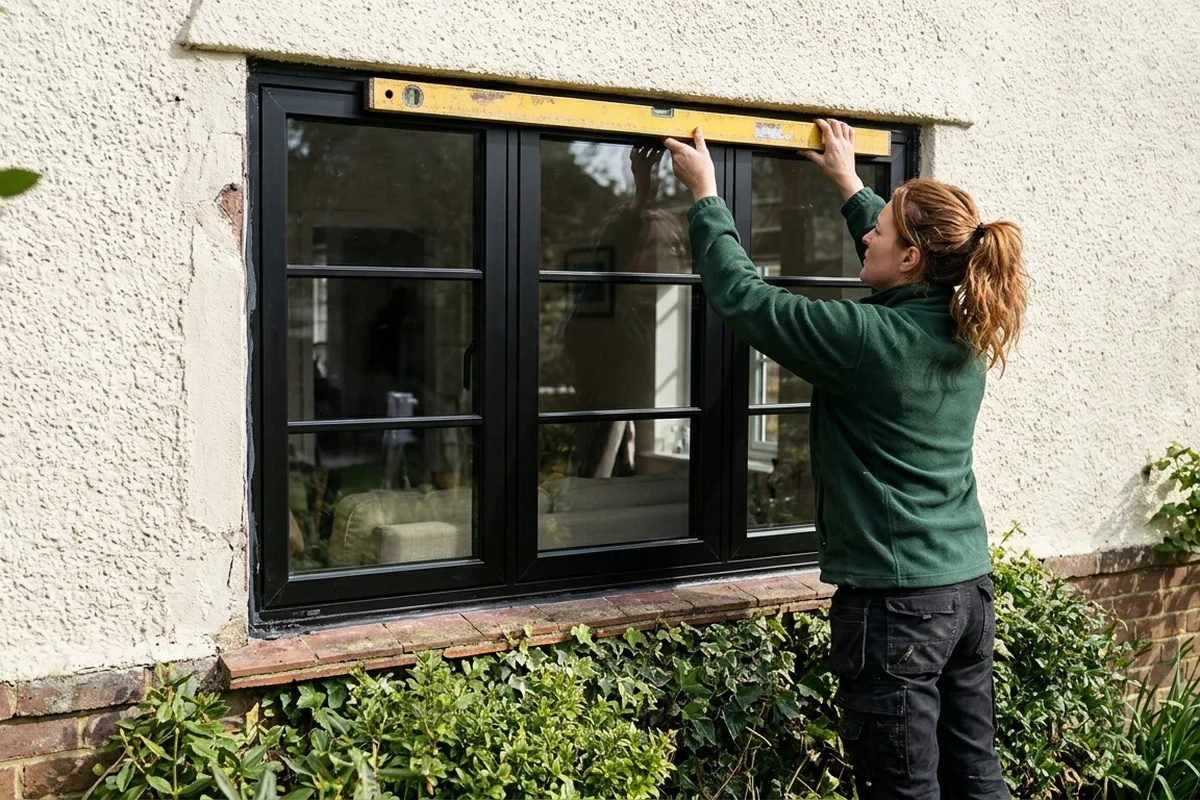
Steel-look windows are aluminium frames made to read like the old metal ones: very slim sections, black or dark grey, with horizontal glazing bars. On a rendered 1930s house they put back the look the architect intended, with modern double glazing.
What to expect
- Frames far slimmer than uPVC, so more glass in the same opening.
- Black, anthracite or a dark bronze finish that will not rust.
- Horizontal bars set to match the original pattern, often three panes high.
- Side-hung openers that close on a modern multi-point lock.
On price, steel-look aluminium sits above uPVC and below timber. It is a good fit for Dale Avenue and Windmill Avenue too, where the 1930s and 1950s houses have the same wide, low openings.
Why the original metal windows went
The windows first fitted on the Home Estate would have been slim steel casements, single glazed, made by the thousand in the 1930s. They looked crisp, but they were cold: condensation ran down the glass every winter morning, and once the paint failed the steel rusted, swelled and cracked the panes. By the 1970s and 1980s most owners had swapped them for aluminium or uPVC, and the Hassocks Townscape Appraisal notes that the mix of replacements is now one of the things that breaks up those streets.
A steel-look aluminium window keeps the slim lines and dark colour of the originals, with a thermal break inside the frame and double glazing that meets today's energy standard. It will not rust, and the powder-coat finish needs only a wash.
Repair or replace?
For a listed house, or for the rare Hassocks semi whose original metal windows are still sound, repair is worth considering first. Historic England's guide to traditional windows, their care, repair and upgrading covers metal windows as well as timber, including how old steel frames can be overhauled and upgraded. On an ordinary 1930s semi with replacements already in, steel-look is the simpler route back to the original appearance.
Choosing the bar pattern
The 1930s houses here mostly had wide casements divided by horizontal bars, often into three panes high, with narrow side openers and sometimes a small top light. If you don't know what was there originally, look along the street for a neighbour who kept theirs, or for old photographs: the parish council's history page includes a 1951 view of the junction of Grand Avenue and Keymer Road.
- Keep the bars horizontal on a 1930s house. Square grids belong to a different period.
- Match the bar height across every window on the front, including the small one over the porch.
- Choose real bars on the outer and inner surfaces, not a thin strip floating in the cavity.
Planning on the 1930s streets
Grand Avenue, Mackie Avenue, Queen's Road and King's Road are outside any conservation area, so on a house a steel-look window needs no application if it looks broadly like what it replaces. As steel-look frames are closer to the original 1930s appearance than most of the windows they replace, they are rarely a planning problem. Flats are the exception, as they always are.
On the day
Most 1930s semis have five to eight windows, so a full set is usually two days on site. Rendered reveals often crack a little when an old frame comes out; the fitters make good with mortar and render, and the reveals then need painting by you once dry. For the first floor the crew moves a mobile tower along the front from window to window, and the old 1930s frames leave with them that day.
Steel-look window questions
Are steel-look windows actually made of steel?
No. They are aluminium, shaped and finished to look like the old steel windows. Aluminium does not rust and takes a thermal break, so the frames stay warmer and the windows meet current energy rules.
Can steel-look windows open?
Yes. They are normally side-hung casements with fixed panes beside them, closing onto a multi-point lock. Top lights can open as well.
Do steel-look windows suit a house that is not from the 1930s?
They can look good on some 1950s houses with wide, low openings. On a Victorian villa a sliding sash is nearly always the better choice.
See if steel-look suits your house
Send us the street name on a call. We can usually tell from that whether the house started with metal windows.