Sayers Common windows for old cottages and new streets
London Road, Reeds Lane and the newer streets either side
A hamlet on the old Brighton road
Sayers Common grew along the main road from London to Brighton, inside the parish of Hurstpierpoint. Until the 1990s the A23 ran straight through it as a single carriageway, and local writers remember the Muddleswood and Bolney crossroads as notoriously dangerous. Once the new A23 opened to the east, London Road became a local road, and the village became an attractive place to build.
The Victoria County History records that Sayers Common became an ecclesiastical parish in 1881, and that Elvey Cottage there has 15th-century origins.
Christ Church
Services were held in the schoolroom by 1843. Plans for a stone church were drawn in 1850 but never built for lack of money; the nave that went up in 1879 was a simpler design by Charles Barry junior, built in flint with brick dressings to keep the cost down. The chancel was added in 1909.
Sayers Common has no conservation area, and it shares Hurstpierpoint and Sayers Common Parish Council with its larger neighbour. The two villages also share a neighbourhood plan, the Hurstpierpoint and Sayers Common Neighbourhood Plan, made in March 2015 after a referendum in which more than nine in ten voters backed it.
Windows for a house in Sayers Common?
A quarter of an hour on the phone covers the house, the options and the planning position in Sayers Common.
New streets
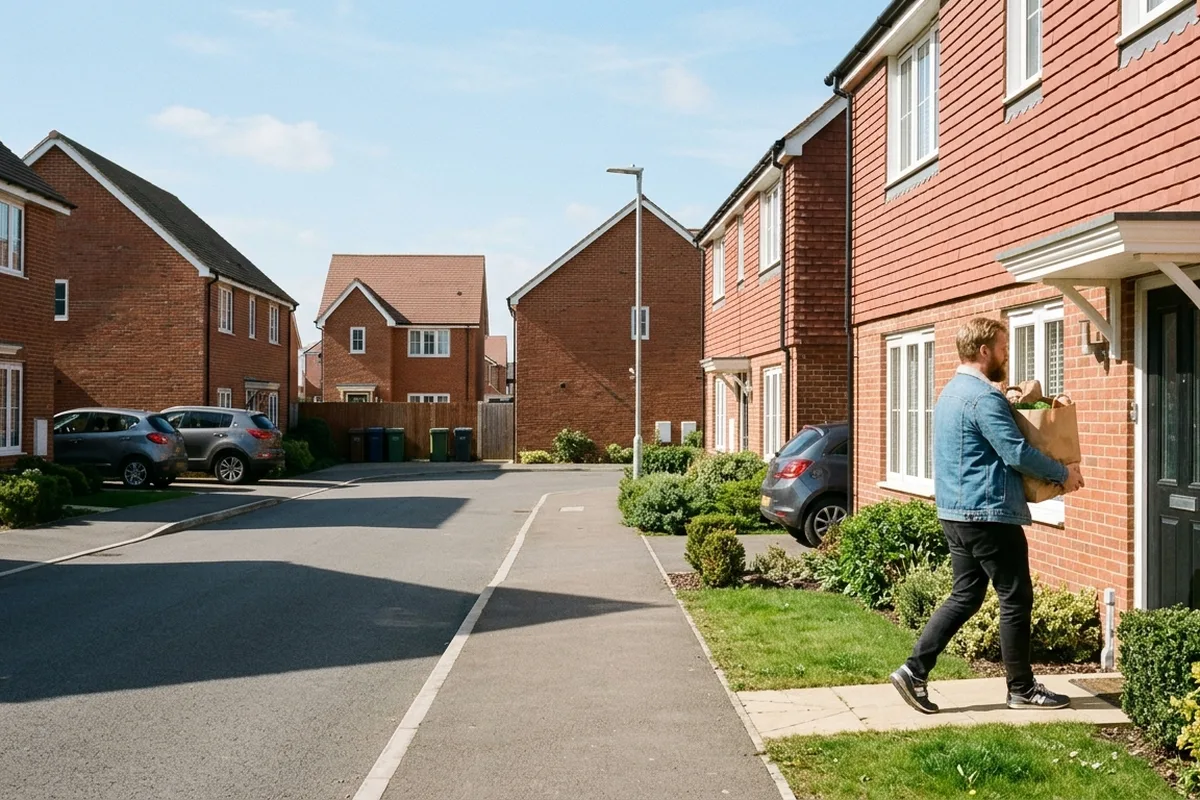
Berrylands Farm was the first large development, followed by smaller schemes and new homes on the western side of the village, with more planned off Reeds Lane. Most of those houses were built with uPVC casements.
What this means for your windows
For the newer homes, replacements are usually straightforward: no planning application, and a choice of chamfered or flush casements in any colour. The older cottages along London Road suit flush casements with a traditional bar pattern. Any listed building still needs consent. Houses close to the A23 can benefit from acoustic laminated glass in the rooms facing the road.