Keymer windows for flint cottages and Victorian terraces
The Crescent, Lodge Lane, Keymer Road and the streets towards Ditchling
The older half of the parish
Keymer is older than Hassocks by several centuries. Its church is recorded in Domesday Book and is one of only a handful in England dedicated to St Cosmas and St Damian, the patron saints of doctors. When the railway came, more than 400 navvies building the line and the Clayton Tunnel lodged near the works or in Keymer cottages.
The Hassocks parish council, formed in 2000 by combining the old parishes of Clayton and Keymer, keeps a short history of the area on its website.
The conservation area
Mid Sussex designated Keymer Conservation Area in January 1989 to protect the historic core and the approaches from Ditchling and along Lodge Lane. It contains seven listed buildings, and they are the only listed buildings in the built-up area of Keymer and Hassocks.
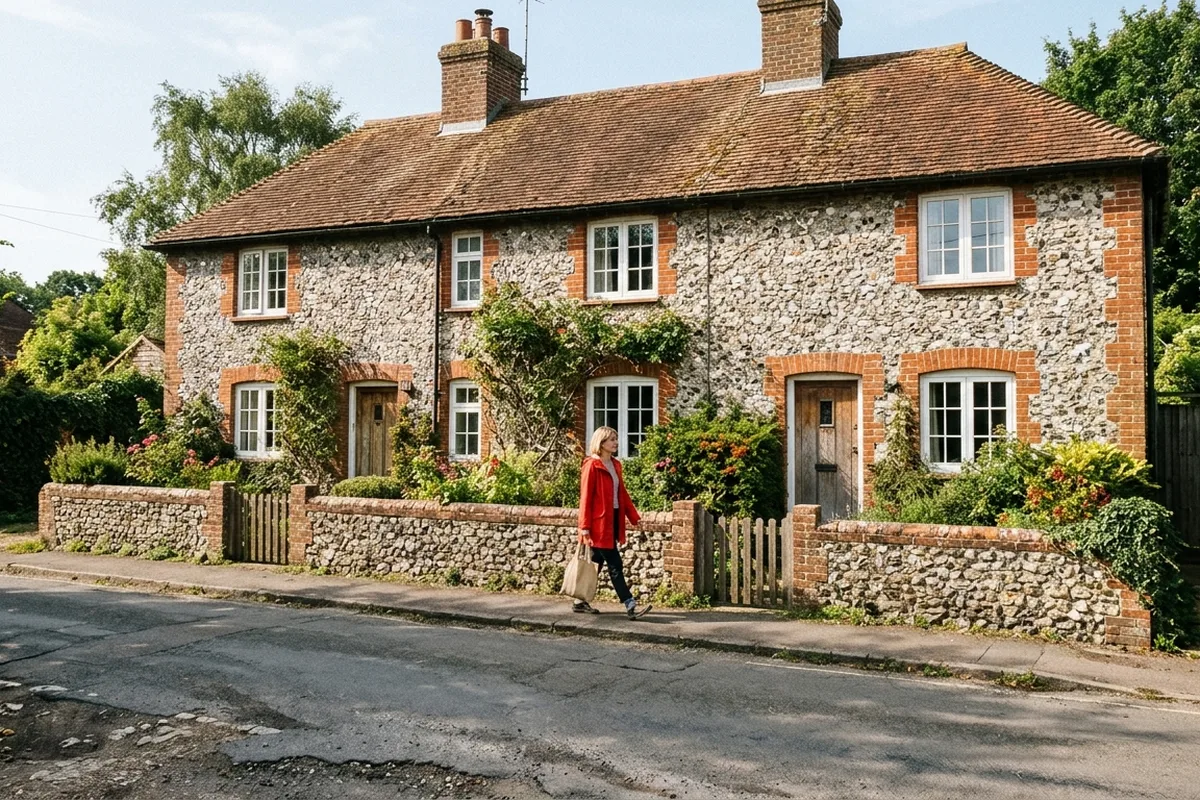
The parish's townscape appraisal describes an 18th-century core with listed medieval houses, Victorian terraces and villas, and some good 20th-century detached houses. Flint walling is a feature, and the cottages have brick walls. The Crescent is narrow and secluded; Lodge Lane has longer gardens and faster traffic.
Windows for a house in Keymer?
A quarter of an hour on the phone covers the house, the options and the planning position in Keymer.
The church
Historic England's list entry, made in 2007 at Grade II, records a Norman chancel. The church was restored around 1864 by the Brighton architect Edmund Scott, who added a south aisle and rebuilt the tower in flint with stone dressings. A north aisle followed in 1889 to 1890, and the south porch in 1909.
What this means for your windows
Most of Keymer's Victorian terraces are outside the listed group, so similar-looking replacements are usually allowed even inside the conservation area. Flint cottages look best with flush casements in the original bar pattern. If your house is one of the seven listed buildings, any change needs listed building consent, and timber or secondary glazing inside are the usual answers.