Clayton windows for flint homes below the Downs
Underhill Lane, Mill Lane and the houses along the old London road
A spring-line village in the National Park
Clayton sits at the foot of the Downs south of Hassocks, inside the South Downs National Park. Underhill Lane is the main village street, narrow and rural, just off the A273, which was the old main road between Brighton and London.
Mid Sussex first designated a conservation area here in October 1984, in two parts, and an extension in 1999 joined them. The National Park Authority adopted a new appraisal in September 2018.
Church, windmills and tunnel
The appraisal calls St John the Baptist, listed Grade I, the single most important building in the village. Its wall paintings were only rediscovered during a restoration in 1893.
On the hill above are the Jack and Jill windmills, listed Grade II*. Jill is a post mill of 1821 that was moved from Dyke Road in Brighton around 1850; Jack is a brick tower mill of 1866. Jill is cared for by the Jack and Jill Windmills Society. To the west, the north portal of Clayton Tunnel, built in 1841 with octagonal turrets and battlements, has a small cottage set between the turrets, listed Grade II.
Windows for a house in Clayton?
A quarter of an hour on the phone covers the house, the options and the planning position in Clayton.
Materials and windows
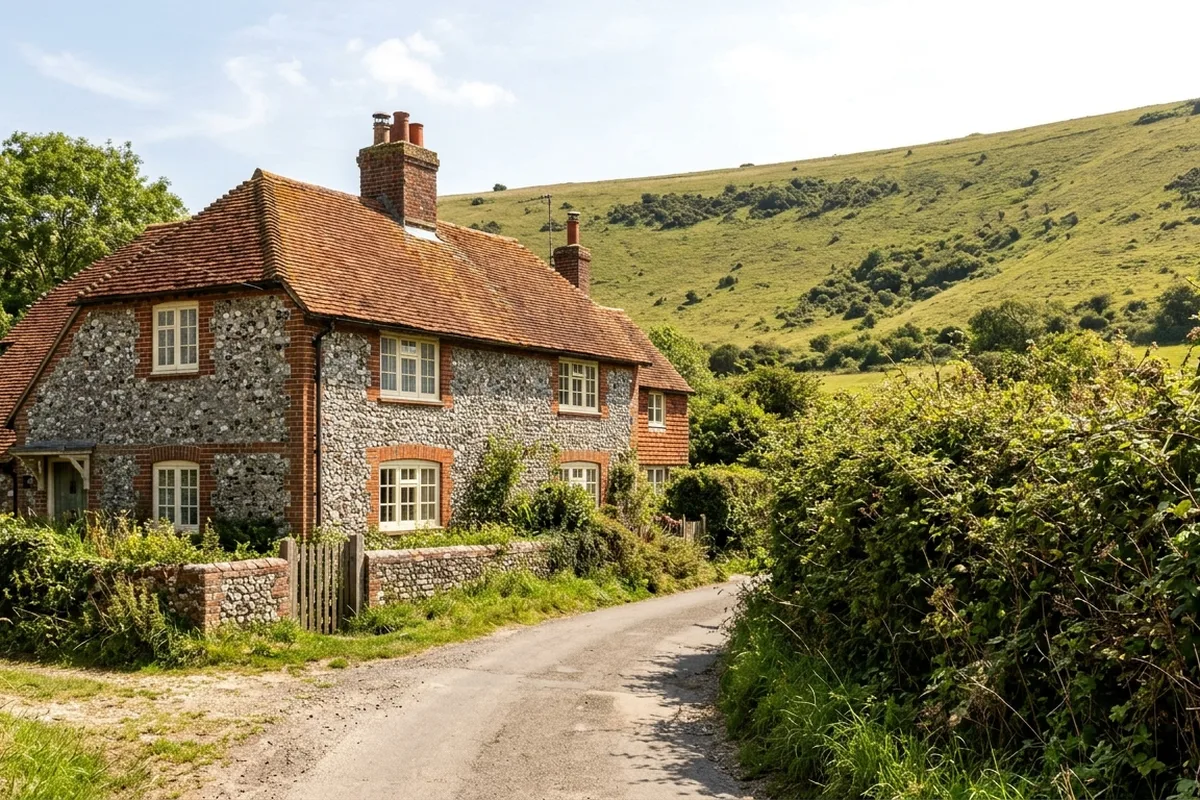
The appraisal notes flint and stone walls, Horsham stone and clay tile roofs, brick, tile-hanging and painted brick. Casement windows appear in the list descriptions of houses such as Hill Side and Clayton Castle. There is no Article 4 direction on Clayton's houses at present, though the appraisal suggests the Authority could consider one if original features start to disappear.
What this means for your windows
For an unlisted house, similar-looking replacements are usually allowed, but the Authority will expect them to respect the flint and brick around them. Flush casements with slim bars sit well here. Listed houses need consent, and timber is the usual answer.