Casement windows in Hassocks for 1920s and post-war homes
London Road, Friars Oak Road, Keymer and the estates between them
Built for small, upright openings
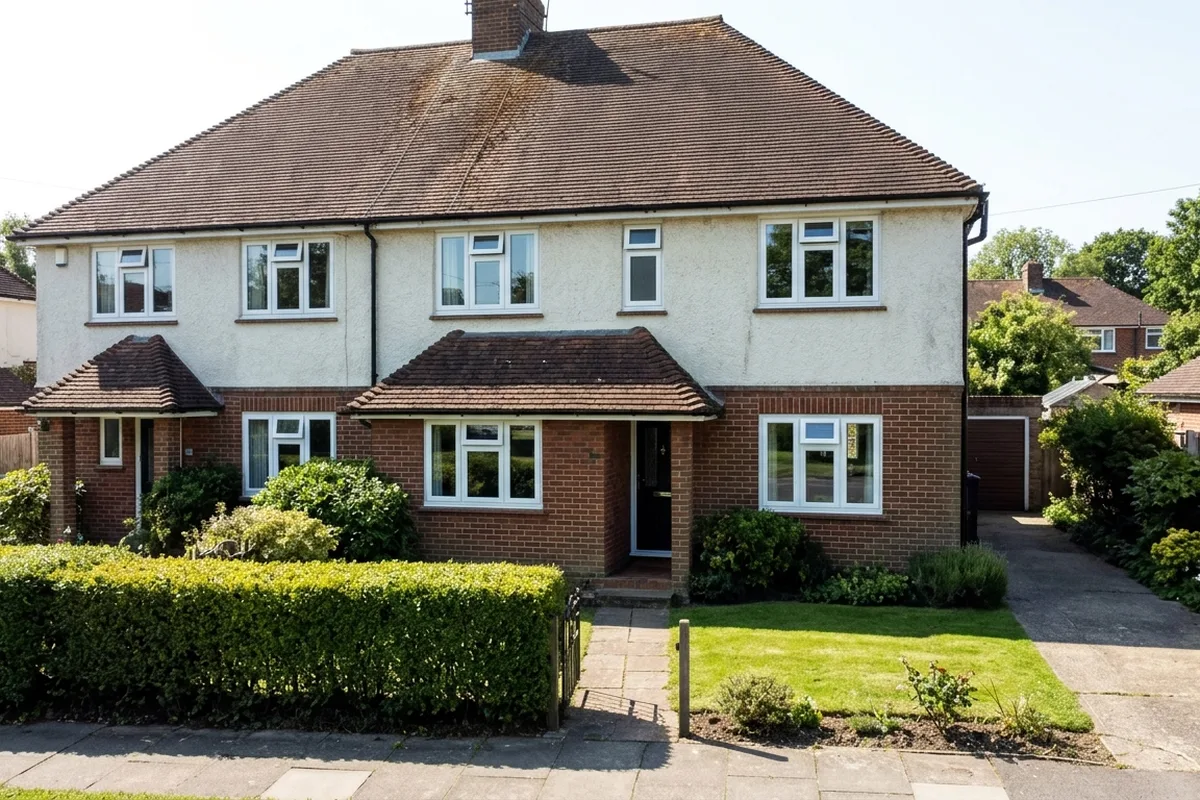
Hassocks had council houses earlier than many villages. The terraces and semis on London Road went up between 1922 and 1926, with brick and render walls, Arts and Crafts tile detailing and big hipped roofs. After the war came the houses around Friars Oak Road, built in 1946 of Keymer red brick with plain clay tiles and matching low garden walls.
Both groups have small portrait windows tucked under large roofs. A casement with slim frames and top-opening vents fits those openings without eating the glass.
Chamfered or flush?
Chamfered casement
Its opener stands a little forward of the frame, edged with a bevel. It is the everyday modern casement and the better value of the two, in white or a heritage colour.
Flush casement
Opener and frame finish on one plane, as a joiner would have made it a century ago. It costs more but suits the 1920s houses and the cottages in Keymer better. Genuine timber is noticeably dearer than a flush casement in woodgrain uPVC.
Colours on Keymer brick
White is still the most common choice in Hassocks, but grey, cream and green look well on the red Keymer brick of the post-war houses. If your street has kept a single colour, matching the neighbours usually looks best.
On an ordinary Hassocks house outside the conservation areas, new casements that look much like the old ones can go in without an application. Flats are another matter: see the planning page.
Brick made down the road
The parish townscape appraisal describes the 1946 houses around Friars Oak Road as built of Keymer red brick. The name comes from the brick and tile works at Keymer Junction, on the edge of Burgess Hill a couple of miles north, which was rebuilt after a fire in 1884 and kept making bricks and tiles under the Keymer Brick and Tile Company until 2014, as the Burgess Hill Town Council history pages record.
That warm, slightly uneven red is why bright white frames can look so stark on these houses. Hold a colour sample against the brick on a sunny day before you decide; agate grey, cream and chartwell green are the usual favourites here.
Getting the proportions right
The Hassocks Village Design Statement criticises replacement windows with very wide sections over thin sills, and the 1920s London Road houses show why: their openings are small, so every extra centimetre of frame takes away glass. Three habits help.
- Keep the same number of openers in the same places as the old window, so the pattern across the front stays even.
- Use top-hung vents above side-hung casements where the house had them; on the 1920s houses they often did.
- Ask for a deeper sill if the old one was deep. A thin sill under a chunky frame is the look the design statement warns about.
Regulations that apply to a casement
Every new casement must meet the current energy standard and, where the old window had trickle vents, keep vents at least as large. Upstairs, a bedroom window needs an opener big enough to escape through, so an old casement with only small top lights may come back with a larger side-hung opener. Any pane near the floor, or next to the front door, will be toughened safety glass. The installer certifies all of this under FENSA, and Mid Sussex building control does not need to hear from you.
If you are thinking of adding or enlarging an upstairs window on the side wall, facing a neighbour, check with Mid Sussex first: the national guidance expects new side windows upstairs to be obscure-glazed and fixed, or opening only above 1.7 metres from the floor.
Casement window questions
Chamfered or flush: which casement suits my house?
On a chamfered casement, the bevelled opener stands proud of its frame by a few millimetres. A flush casement sits within its frame with the faces level, much as the joinery on a 1920s London Road house would have been. Flush costs more but looks closer to the original on older houses.
Can I change from white to a colour?
Yes. On an ordinary house outside a conservation area, a change of colour on otherwise similar windows does not normally need an application. In a conservation area, ask the council before changing colour.
Can I replace just the windows at the back?
Yes. Many people start with the rear windows and do the front later. Just the one window costs a call-out charge as well, whereas three or more take up an ordinary day for the Hassocks fitters.
Casements for the whole house or one room
Single windows are quoted too. Three or more fill a full fitting day.